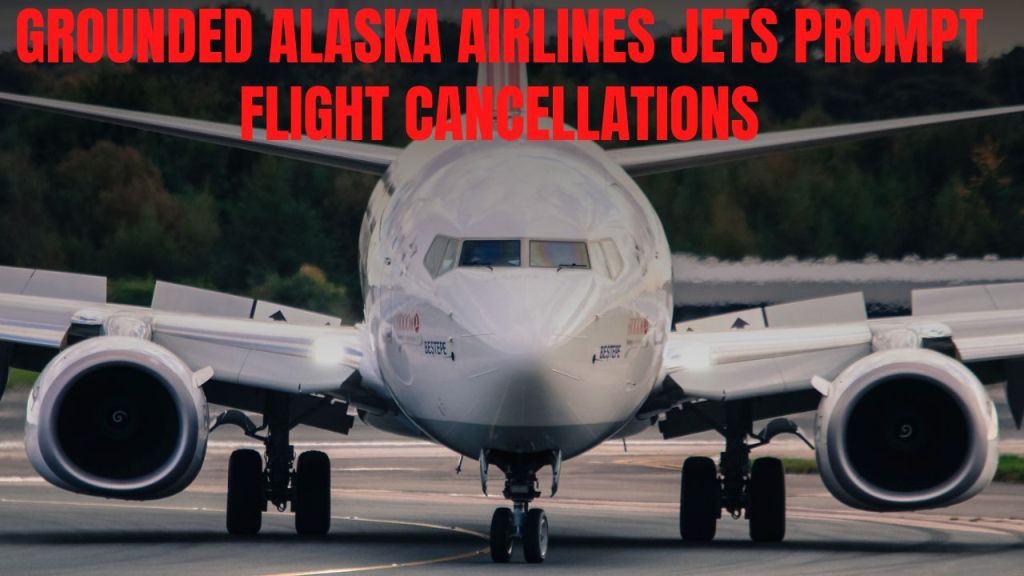
In a recent setback for Alaska Airlines, a fuselage panel incident has forced the carrier to ground a significant portion of its fleet, creating disruptions for passengers. The Boeing 737 Max 9 jet mishap, resulting in a hole in the plane’s side, prompted the airline to announce an extended grounding until at least Saturday. The airline, along with United, is among the heaviest users of the Max 9, with Alaska facing a more substantial impact due to its higher reliance on the model.
As Alaska grapples with the fallout, up to 150 flights per day have been canceled, constituting about 20% of its daily operations. The Federal Aviation Administration’s subsequent order to ground and inspect all 171 Max 9 jets in the U.S. has added complexity to the situation. Boeing’s inspection instructions have faced revisions, emphasizing the prioritization of public safety over expediency.
The National Transportation Safety Board is actively investigating the incident, focusing on the manufacturing and installation of the dislodged fuselage panel. Alaska, in response to the grounding, is exploring alternative aircraft for affected routes, reflecting the intricate decision-making process involved.
Transportation Secretary Pete Buttigieg affirmed the commitment of Alaska and United to compensate passengers affected by cancellations, distinguishing this event as a “controllable” situation. While the disruption coincided with a typically slower period for airlines in January, analysts highlight the potential severity if it had occurred during busier holiday seasons.
As Alaska Airlines awaits resolution and the return to normal operations remains uncertain, the incident underscores the challenges faced by carriers in managing unexpected disruptions and ensuring passenger well-being.


 Site Title
Leave a comment