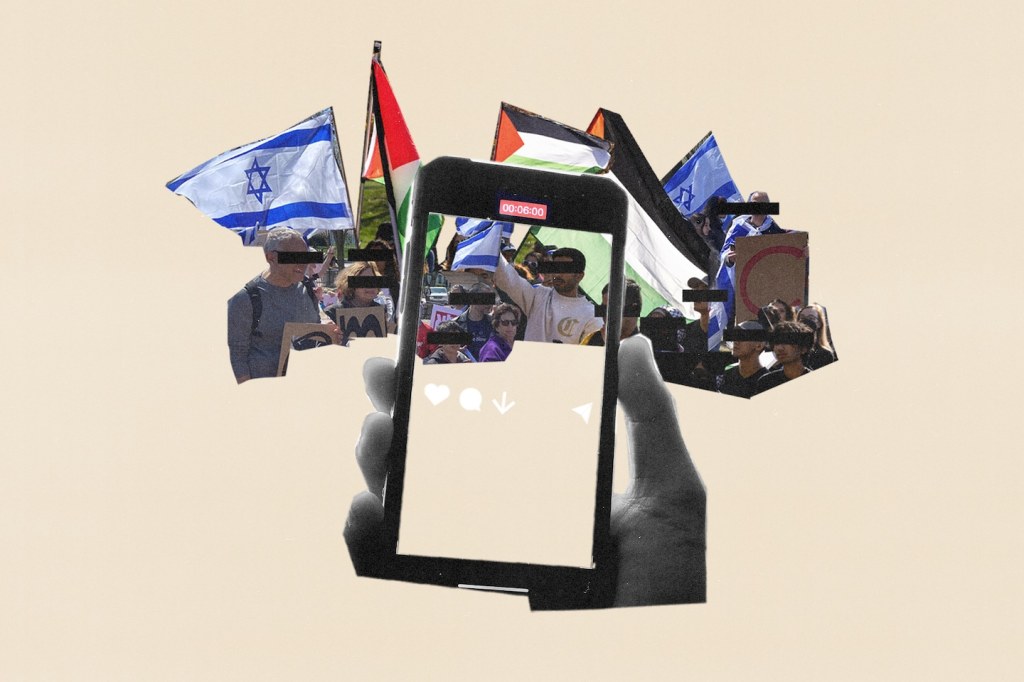
Tap through a social media feed
Today, a social media feed may appear different from a month ago. There are fewer images shared of daily activities, such as concerts, birthdays, or meals. Instead, there are more posts related to the Israel-Palestine conflict. These posts are violent and evocative, with images of war, including a bloodied Israeli hostage, a deceased Palestinian child, and infographics shared widely.
According to Loutje Hoekstra, a 29-year-old artist, her social media feed has become a “pretty much a war zone”. As a result, she has stopped sharing her art or anything about her personal life. This change has been observed across social media platforms as users navigate the evolving norms of sharing during the Israel-Gaza war.
Recent events, including the ongoing Israel-Gaza war, have led to a shift in social media behavior. Pamela Rutledge, director of the Media Psychology Research Center in Boston, commented that the current situation is unprecedented due to a wide range of perspectives and personal connections to the conflict. People like Laila Rodenbeck from New York have chosen to use social media as a platform to raise awareness, sharing links to donate aid and Palestinians’ firsthand accounts of life in Gaza. Instead of sharing personal images, people like Rodenbeck are now using their online presence to draw attention to the dire situation in Gaza.
David Goldberg, a tech worker, also feels the need to combat “misinformation” about Israel and has been sharing videos and images to raise awareness about the Jewish community during the war. While some like Goldberg have received positive feedback, others like PhD student in Chicago have refrained from posting to avoid potential backlash related to the sensitive topic. According to this student, people’s posts may be seen as mere “virtue signaling” and are often performative.
While some users might like the increased focus on the Israel-Gaza war, experts speculate that social media will likely return to its previous state once the conflict subsides. Many users are contemplating what to share during this time, evaluating the necessity of their posts in light of the devastating reality of the conflict.
To conclude, the ongoing war has altered how individuals use social media. Users are grappling with the decision to share daily life content or solely focus on the conflict, reflecting a nuanced and challenging experience online.


 Site Title
Leave a comment