CNN — Possibly the most intense rivalry in distance running currently exists not between two of the world’s top athletes, but rather between two major marathon races worldwide. When Tigst Assefa of Ethiopia finished the Berlin Marathon six weeks ago in an astonishing time of two hours, 11 minutes, and 53 seconds – shattering the previous record by over two minutes – the limits of women’s running were suddenly redefined. This groundbreaking victory not only belonged to Assefa, but also to Adidas, the company responsible for the sleek shoes she was wearing. “Tigist Assefa… we are so proud of you!” CEO Bjørn Gulden later posted on Instagram. Two weeks later, however, a rival brand was celebrating a world record of its own. Enter Kelvin Kiptum, a 23-year-old Kenyan wearing orange and red-tinted Nikes with bright pink socks at the Chicago Marathon. Kiptum, in only his third ever marathon, finished in a time of two hours and 35 seconds – 34 seconds faster than the previous world record set by his compatriot Eliud Kipchoge, widely considered to be the greatest distance runner of all time. These two records in quick succession have intensified the debate about the impact of carbon-plated shoes, commonly referred to as “super shoes,” on the world of distance running. Today, these shoes are worn by virtually all elite marathon runners, as well as many casual runners. Some are excited about the new technology, seeing an influx of world records and fast times as progress for the sport. However, others, such as coach Peter Thompson, believe that these shoes are distorting performance and eliminating the “natural progression” in distance running. Thompson argues that the focus has shifted from competition between individuals to a corporate rivalry between brands, where success is determined by the superiority of materials and architecture. The modern running footwear is designed with stiff, curved plates for greater propulsion, embedded within lightweight foam soles that adhere to guidelines set by World Athletics. Take Adidas’ Adizero Adios Pro Evo 1, for example, which was worn by Assefa during her world record. They weigh only 138 grams, have a 39-millimeter-thick heel, and claim to provide the runner with better energy return, enhancing running economy. Nike, on the other hand, has been at the forefront of the running shoes arms race since the 2016 Rio Olympics, when the Zoom Vaporfly model was worn by athletes including Kipchoge. The Alphafly 3, Nike’s latest offering, has been hailed by the company as “the fastest marathon shoe in the world.” It is clear that these super shoes have indeed made the world’s fastest marathon runners even faster, as evidenced by the significant increase in top times achieved since 2018. However, this has raised questions about the legitimacy and historical context of these records, prompting calls to update the sport’s record books to account for the impact of super shoes. Despite the controversy, major running brands continue to develop their own models of carbon-plated footwear, including Puma, New Balance, Asics, and Saucony. While there are criticisms surrounding the technology’s performance differences among runners, it is undeniable that super shoes have made a significant impact on the sport of distance running.
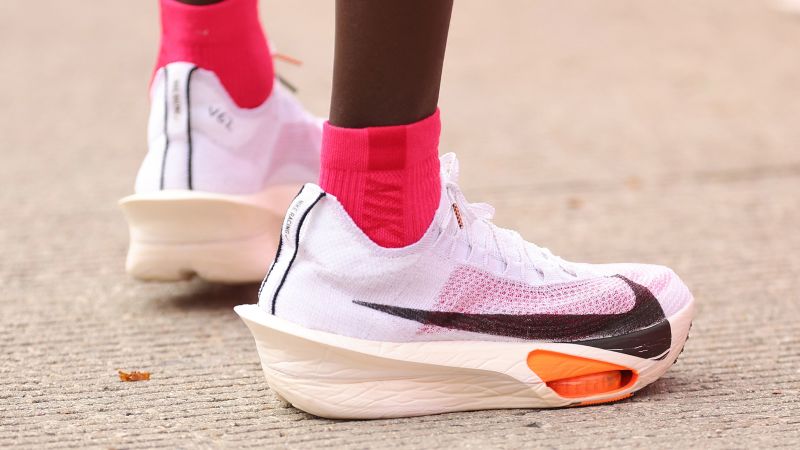
Are ‘Super shoes’ revolutionizing distance running in the New York City Marathon and benefiting the sport?
CNN — Possibly the most intense rivalry in distance running currently exists not between two of the world’s top athletes, but rather between two major marathon races worldwide. When Tigst Assefa of Ethiopia finished the Berlin Marathon six weeks ago in an astonishing time of two hours, 11 minutes, and 53 seconds – shattering the previous record…
2–3 minutes


 Site Title
Leave a comment